Selecting a film plastic recycling line requires matching equipment configuration to your specific feedstock type, contamination level, and output quality requirements. There is no single “standard” film recycling line—the right configuration depends on film density, moisture content, printed vs. unprinted material, and whether you are processing industrial scrap or post-consumer waste. This guide walks through the key decision factors to help you evaluate options before contacting a supplier.
Why Film Plastic Requires a Different Approach
Film plastics—including LDPE, LLDPE, HDPE film, PP non-woven fabric, and agricultural mulch film—present unique challenges compared to rigid plastics. Their low bulk density (as low as 50 kg/m³ for some films) means they cannot simply be dropped into a standard single-screw extruder. Without proper force-feeding or compaction, the material bridges over the hopper, wraps around screws, and causes inconsistent output.
Additionally, post-consumer film often carries high moisture content—frequently exceeding 30%—which turns the extrusion process into a steam-filled operation that degrades polymer quality if not properly managed. Printed films and laminated materials introduce ink residues and aluminum particles that can clog filtration systems within minutes.
For these reasons, a purpose-built film recycling line differs significantly from standard granulation equipment. The following sections outline the key configuration factors buyers should evaluate.
Feedstock Assessment: The Starting Point
Before reviewing any equipment specifications, you must thoroughly characterize your input material. This is the single most important step in the selection process.
Key Feedstock Questions
| Question | Why It Matters |
|---|---|
| What type of film are you processing? | LDPE stretch wrap, LLDPE agricultural film, PP non-woven fabric, and printed BOPP all behave differently in extrusion |
| Is the film clean or contaminated? | Industrial scrap (e.g., production trim) requires less preprocessing than post-consumer or agricultural film |
| What is the moisture content? | Higher moisture demands more robust drying and degassing stages |
| Is the film printed or laminated? | Inks and laminates require multi-stage filtration to avoid clogging |
| What is the bulk density? | Lower density requires more aggressive force-feeding mechanisms |
| What is the expected throughput? | This determines screw diameter, motor power, and overall line capacity |
Practical tip: Collect representative samples of your actual waste stream—not just the cleanest batch—and discuss them with equipment suppliers. Film quality varies significantly from load to load, and a configuration that works for clean stretch wrap may fail for agricultural film covered in soil and UV stabilizers.
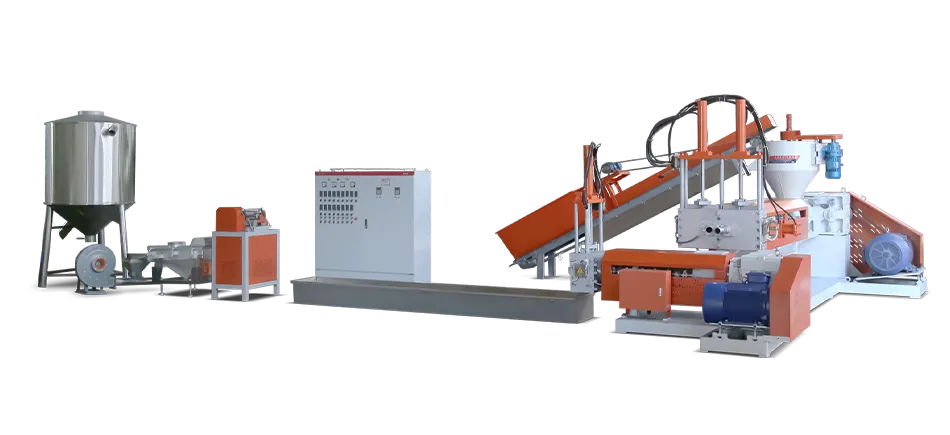
Core Equipment Configuration Factors
1. Feeding and Densification Mechanism
The feeding system is the most critical differentiator between a standard granulator and a functional film recycling line. Film’s low bulk density means it must be compacted and force-fed into the extruder.
What to look for:
-
Force-feeding or stuffer mechanism: A system that actively pushes material into the screw root, preventing bridging and starvation
-
Synchronous extrusion: Dual rollers rotating in opposite directions to mechanically grip and compress fluffy material
-
Cutter compactor or agglomerator: Some lines use a pre-compaction stage to densify film before extrusion—though batch-type units can create inconsistent feed rates
Decision factor: If your film has bulk density below 150 kg/m³, a standard gravity-fed hopper will not work. You need positive-force feeding.
2. Screw Design and Drive Power
The screw is the heart of the extrusion system. Film recycling requires specific screw geometries that differ from rigid plastic processing.
Key screw parameters to evaluate:
| Parameter | Consideration |
|---|---|
| Screw diameter | Larger diameters (e.g., 150mm–220mm) handle higher throughput but require more power |
| Screw length | Longer screws (up to 3.5m) provide more residence time for melting and degassing |
| Compression ratio | Must be matched to film type—lower for thin films, higher for denser materials |
| Screw material | 38CrMoAl with nitriding (HV ≥950) provides wear resistance for abrasive contaminants |
Power requirements vary significantly by material. A line processing PP non-woven fabric may need different power than one running thin LDPE stretch film. Available configurations typically range from 37KW to 90KW for main unit motors.
3. Drying and Moisture Management
Moisture is the enemy of film pellet quality. Even after washing, surface moisture clings stubbornly to thin film surfaces. If moisture enters the extruder, it turns to steam at 100°C while the plastic melts at 120–180°C—creating bubbles, weakening pellet structure, and posing safety risks.
Moisture management components to evaluate:
-
Friction washer: Uses high-speed rotation to mechanically remove moisture and volatiles through centrifugal force, achieving surface dryness of up to 95% before material enters the extruder
-
Thermal densifier or dryer: Further reduces moisture content to below 0.5% before extrusion
-
Vacuum degassing: Removes residual moisture and volatiles within the extruder barrel
Decision factor: If your film consistently arrives wet (e.g., agricultural film or post-consumer packaging), prioritize lines with integrated friction washing and multiple drying stages.
4. Filtration System
Contaminated film—especially printed or laminated material—generates significant residues that must be removed to produce quality pellets.
Filtration options:
-
Single hydraulic screen changer: Suitable for cleaner film streams with low contamination
-
Dual-stage or double hydraulic screen changer: Essential for printed or laminated film to remove ink residues and aluminum particles that would clog a single filter within minutes
The screen changer type and size (e.g., 300mm hydraulic) directly affect maintenance frequency and production uptime.
5. Recirculation and Quality Control
Film feedstock is rarely uniform. A well-designed film recycling line includes recirculation capability to handle oversized or unmelted particles.
What to look for:
-
Screening and crushing chamber: Automatically filters out oversized particles
-
Recirculating conveyor: Returns rejected material to be mixed with fresh feedstock and reprocessed
This closed-loop design helps maintain consistent pellet quality even when feedstock varies—a critical feature for operations processing post-consumer or agricultural film.
Preprocessing Considerations
Not all film recycling lines include washing and shredding stages. Understanding your preprocessing needs is essential.
| Material Type | Recommended Preprocessing |
|---|---|
| Clean industrial scrap (trim, off-spec rolls) | Shredding/crushing only; may not require washing |
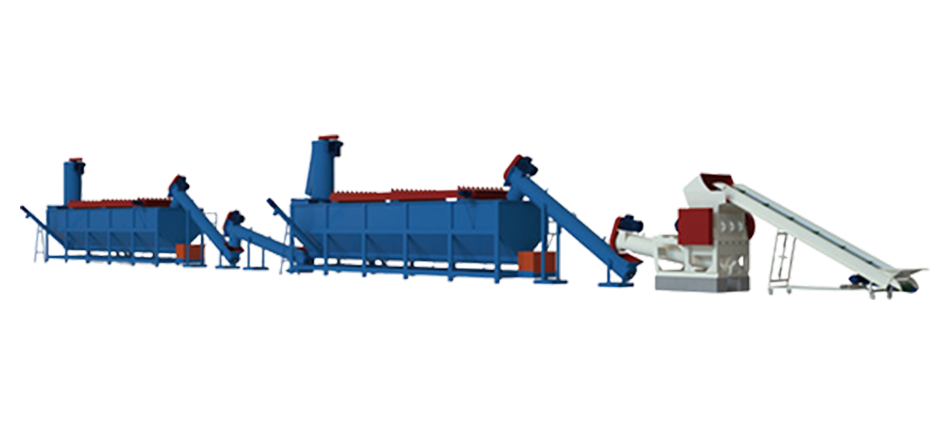
| Printed packaging film | Shredding + washing + friction washing + multi-stage filtration |
| Agricultural film (soil, sand, UV stabilizers) | Shredding + heavy-duty washing + friction washing + drying |
| Post-consumer mixed film | Sorting + shredding + washing + drying + granulation |
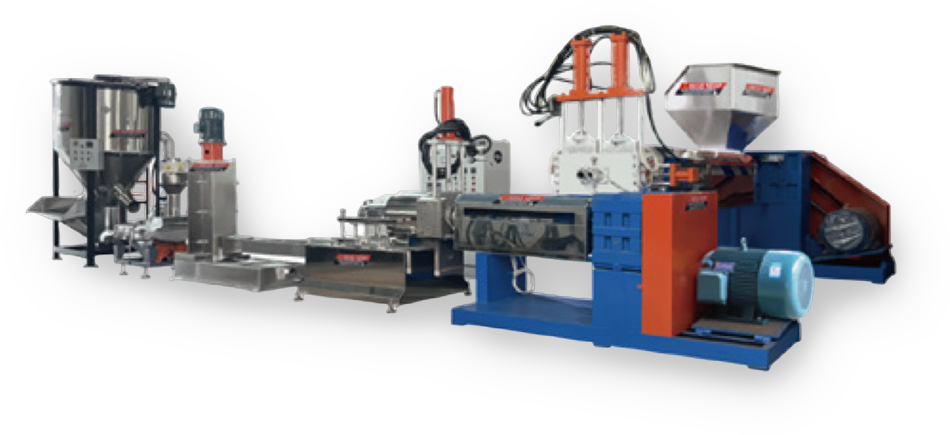
REHOBOTH offers both granulation-only systems and integrated cleaning and granulation recycling systems. The choice depends on your feedstock cleanliness and output quality requirements.
Common Configuration Mistakes to Avoid
| Mistake | Consequence |
|---|---|
| Undersizing the motor for wet or heavy loads | Stalling, downtime, and reduced throughput |
| Skipping force-feeding on low-density film | Bridging, starvation, and inconsistent output |
| Using single-stage filtration on printed film | Rapid clogging and frequent screen changes |
| Ignoring moisture content in feedstock | Steam explosions, degraded pellets, and safety risks |
| Choosing a line without considering future feedstock changes | Equipment becomes obsolete as waste stream evolves |
Budget and Operating Cost Factors
While equipment purchase price varies by configuration, buyers should also consider ongoing operating costs:
-
Energy consumption: Electromagnetic heating can reduce energy consumption by 30–70% compared to traditional resistance heating coils
-
Wear parts: Screws, barrels, and pelletizer blades require periodic replacement
-
Maintenance frequency: Dual-stage filtration may reduce downtime but increases filter costs
-
Labor requirements: Higher automation (PLC control) reduces manual intervention
Note: Actual operating costs depend on throughput, material type, and local energy prices. Buyers should request specific estimates from suppliers based on their actual operating conditions.
Technical Confirmation Checklist
Before finalizing a film recycling line purchase, confirm the following with your supplier:
- Feedstock type, density, and moisture range have been discussed
- Throughput requirements are clearly defined
- Screw diameter, length, and material are specified
- Motor power is matched to material viscosity and expected load
- Filtration type (single vs. dual-stage) matches contamination level
- Drying and degassing stages are appropriate for moisture content
- Force-feeding or compaction mechanism is included for low-density film
- Recirculation capability is available for quality control
- Electrical configuration matches your facility’s power supply
- Spare parts availability and lead times are confirmed
FAQ
What is the difference between a film recycling line and a standard granulator?
A film recycling line includes force-feeding or compaction mechanisms to handle low-bulk-density material, whereas standard granulators rely on gravity feeding and are designed for rigid plastics. Film lines also typically include more robust drying, degassing, and filtration stages.
Can I process both clean industrial scrap and post-consumer film on the same line?
Yes, but the configuration must accommodate the more demanding material. A line designed for post-consumer film can usually process clean scrap, but the reverse is not true. Discuss your full feedstock range with the supplier to ensure the line is configured for the worst-case material.
How do I know what motor power I need?
Motor power depends on film type, throughput, and contamination level. Heavier films and higher throughput require more power. Suppliers typically offer configurations ranging from 37KW to 90KW for main unit motors. Provide detailed material samples for accurate sizing.
What maintenance does a film recycling line require?
Regular maintenance includes inspecting and replacing wear parts (screws, barrels, blades, belts, bearings), cleaning screen changers, and checking gearbox oil levels. Frequency depends on throughput and material abrasiveness. Many suppliers offer 2-year warranties on major components and 24-hour online service support.
Is electromagnetic heating worth the additional investment?
Electromagnetic heating can reduce energy consumption by 30–70% compared to traditional resistance heating coils. For high-throughput operations with significant energy costs, the payback period may be relatively short. Evaluate based on your local electricity rates and expected operating hours.
How does film pellet quality affect downstream applications?
Consistent pellet size and density are critical for applications like blown film production, where pellet uniformity affects bubble stability. Poor-quality pellets with “fish eyes” or black specs sell at 20–30% discount compared to prime recycled pellets.
Conclusion
Selecting a film plastic recycling line is not about finding the most powerful machine—it is about matching the configuration to your specific material and operating conditions. Start with a thorough assessment of your feedstock: type, density, moisture, contamination level, and throughput requirements. Then evaluate the five core configuration factors: feeding mechanism, screw design, drying capability, filtration system, and recirculation quality control.
Avoid the common mistake of forcing film through a standard granulator designed for rigid plastics. Instead, look for a system that compacts, dries, and positively feeds the material—with the flexibility to handle the variability inherent in film waste streams.
If your operation processes a specific film type or faces unique contamination challenges, the best next step is to review the available film plastic recycling line configurations and discuss your material samples with a technical representative.


 Download
Manual
Download
Manual Video
Video



 Connect: