PP woven bags—commonly used for cement, fertilizer, rice, animal feed, and industrial packaging—represent a significant volume of plastic waste worldwide. Recycling these bags through granulation is a practical way to recover polypropylene (PP) material and reintroduce it into manufacturing. However, woven bags have distinct material characteristics that affect how they should be processed. This article explains the granulation process for PP woven bags, the key challenges involved, and what to consider when planning a recycling setup.
What Makes PP Woven Bags Different from Other Plastics?
PP woven bags are made from polypropylene tapes or yarns that are woven into a fabric structure. This woven construction gives the bags high tensile strength and tear resistance, which is why they are preferred for heavy-duty packaging.
From a recycling perspective, this structure creates specific considerations:
| Material Property | Implication for Granulation |
|---|---|
| Woven fabric structure | Requires effective size reduction before extrusion; fibers tend to wrap around cutting blades |
| High melt flow index variability | Different bag grades (e.g., cement bags vs. food-grade bags) may require different temperature profiles |
| Common contaminants | Cement dust, fertilizer residues, adhesives, labels, and printing inks affect pellet quality |
| Low bulk density | Woven bags are lightweight and fluffy, requiring force-feeding or compaction before extrusion |
Unlike rigid plastics (e.g., injection-molded parts) which feed evenly into an extruder, or film plastics which have their own handling requirements, woven bags sit between these categories in terms of processing behavior.
The Granulation Process for PP Woven Bags
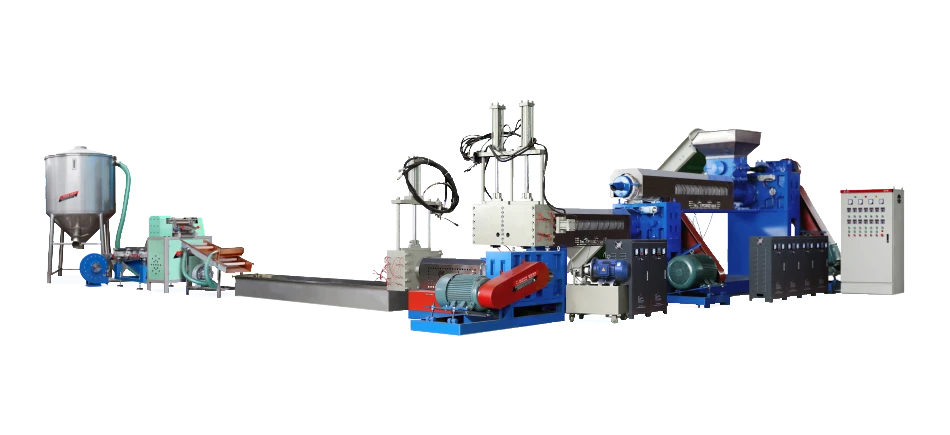
Granulation—also referred to as pelletizing—is the process of converting waste plastic into uniform pellets that can be reused as raw material. For PP woven bags, a typical granulation process includes the following stages.
1. Sorting and Pre-Cleaning
Not all woven bags are the same. Bags used for cement or fertilizers often contain heavy contamination, while production waste (e.g., off-cuts from bag manufacturing) is relatively clean. Sorting helps separate:
-
Contaminated bags that need washing
-
Clean production waste that can go directly to granulation
-
Bags made from different polymer types (PP vs. PE, though most woven bags are PP)
Pre-cleaning may involve removing metal clips, string, or other non-plastic components that could damage equipment.
2. Size Reduction (Shredding or Crushing)
Woven bags must be reduced to smaller pieces before entering the extruder. This is typically done using:
-
Shredders: Low-speed, high-torque machines that cut bags into strips or chunks
-
Crushers: Higher-speed machines that produce smaller flakes
For woven materials, the fibrous nature can cause issues with conventional crushers. The material tends to wrap around rotating blades, reducing efficiency and increasing maintenance frequency.
3. Feeding and Compaction
Due to the low bulk density of shredded woven bags, standard extruder feeding is often insufficient. Force-feeders, side-feeders, or compactors are used to push material into the extruder consistently. Compaction also helps:
-
Increase material density for better melt homogeneity
-
Reduce air entrapment that can cause voids in pellets
-
Improve extrusion stability
4. Extrusion and Melt Filtration
The extruder melts the PP material using heat and mechanical shear. Key parameters include:
| Parameter | Typical Consideration for PP Woven Bags |
|---|---|
| Temperature profile | PP typically melts at 160–220°C; woven bags with heavy printing may need higher temperatures to fully melt inks |
| Screw design | Woven materials may benefit from screws with mixing sections to homogenize melt |
| Melt filtration | Essential for contaminated bags; screen packs or screen changers remove dirt, gels, and degraded polymer |
Filtration is particularly important when recycling post-consumer woven bags, as contaminants directly affect pellet quality and downstream applications.
5. Pelletizing
The molten PP is forced through a die and cut into pellets. Common pelletizing methods include:
-
Strand pelletizing: Melt is extruded into strands, cooled in a water bath, and cut into pellets
-
Water-ring pelletizing: Melt is cut at the die face and immediately cooled in a water ring
-
Underwater pelletizing: Cutting occurs under water for consistent pellet shape and cooling
For PP woven bags, strand pelletizing is common for cleaner material, while water-ring or underwater systems may be preferred for materials with higher contamination levels.
6. Pellet Drying and Classification
Pellets exiting the pelletizer contain surface moisture (in wet-cutting systems) and must be dried. A dewatering machine and centrifugal dryer are typically used. Dried pellets are then classified by size, with oversized or undersized pellets removed for re-processing.
Key Challenges in Woven Bag Granulation
Contamination Control
Post-consumer woven bags often carry cement dust, fertilizer residues, or agricultural chemicals. These contaminants can:
-
Degrade the PP during extrusion, causing discoloration and reduced mechanical properties
-
Clog screen packs, increasing downtime and operating costs
-
Affect pellet appearance, limiting application options
For heavily contaminated bags, a washing line before granulation may be necessary. For cleaner production waste, direct granulation with adequate filtration may suffice.
Melt Filtration and Screen Pack Changes
The frequency of screen pack changes is a major operating cost factor in woven bag recycling. Contaminated material requires more frequent changes, which means more downtime and higher labor costs. The choice of screen changer type (manual, hydraulic, or continuous) affects both cost and operational efficiency.
Pellet Quality Consistency
Recycled PP from woven bags can vary significantly in melt flow rate depending on the source material. Bags from different manufacturers may use different PP grades, additives, or processing aids. This variability affects:
-
The consistency of pellet quality
-
The range of applications the recycled pellets can serve
-
The need for blending or compounding with virgin material
Material Degradation
PP is susceptible to thermal degradation during multiple heating cycles. Each time PP is melted and processed, its molecular weight decreases, which affects mechanical properties. For woven bag recyclers, this means:
-
Processing temperature should be carefully controlled
-
Residence time in the extruder should be minimized
-
Antioxidants or stabilizers may be needed for high-quality applications
Film vs. Rigid Plastic vs. Woven Bags: Granulation Differences
Understanding how woven bag granulation compares to other plastic types helps in selecting the right equipment approach.
| Factor | Film (e.g., LDPE/LLDPE) | Rigid Plastics (e.g., injection-molded PP/ABS) | Woven Bags (PP) |
|---|---|---|---|
| Bulk density | Very low | High | Low to medium |
| Feeding method | Compactor/force feeder | Gravity or screw | Force feeder recommended |
| Screw design | Often single-stage | Single or twin-screw | Single-screw with mixing sections |
| Filtration requirement | Moderate | Low to moderate | High (for post-consumer) |
| Thermal sensitivity | High | Moderate | Moderate |
| Common applications | Film, agricultural mulch, shopping bags | Auto parts, household goods, battery cases | Packaging, industrial sacks, raffia |
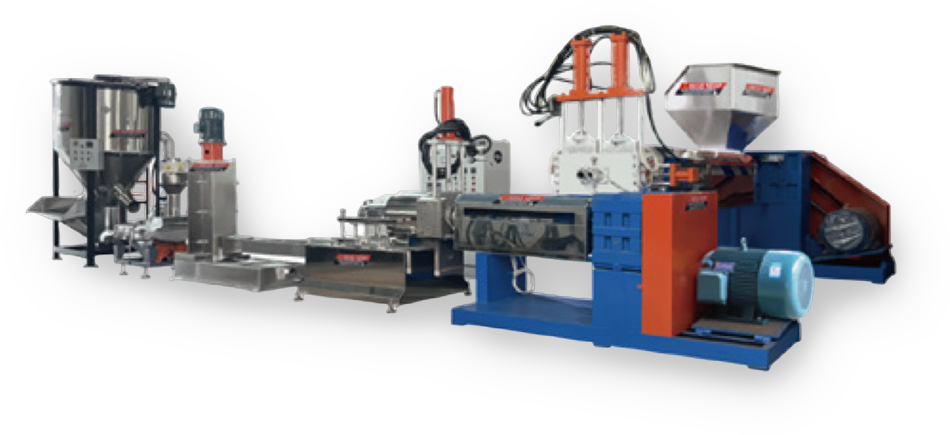
For more detail on film recycling, compare the film plastic recycling line configuration.
How to Choose the Right Granulation Approach for Woven Bags
When evaluating a granulation solution for PP woven bags, consider the following decision factors.
Feedstock Type and Condition
| Feedstock Type | Recommended Approach |
|---|---|
| Clean production waste (off-cuts, rejected bags) | Direct granulation with shredding and force feeding |
| Lightly contaminated post-industrial bags | Granulation with melt filtration; optional pre-washing |
| Heavily contaminated post-consumer bags | Washing line before granulation, or heavy-duty filtration |
Output Quality Requirements
| Target Application | Quality Considerations |
|---|---|
| Raffia/tape extrusion (bag-to-bag recycling) | High purity required; extensive contamination control needed |
| Injection molding (general purpose) | Moderate purity; consistent MFI important |
| Low-grade applications (construction, drainage pipes) | Lower purity acceptable; cost efficiency primary concern |
Production Scale
Smaller operations may use a single-stage granulation system with manual screen changes. Larger operations typically benefit from:
-
Two-stage extrusion (melting + filtration + pelletizing)
-
Automatic screen changers
-
Integrated drying and classification systems
Common Questions About Woven Bag Granulation
Can PP woven bags be recycled with the same equipment as PE film?
Not directly. PP woven bags have different melting temperatures, bulk densities, and feeding requirements compared to PE film. While some equipment can process both with configuration changes, optimal results typically require material-specific setup adjustments.
Do woven bags need washing before granulation?
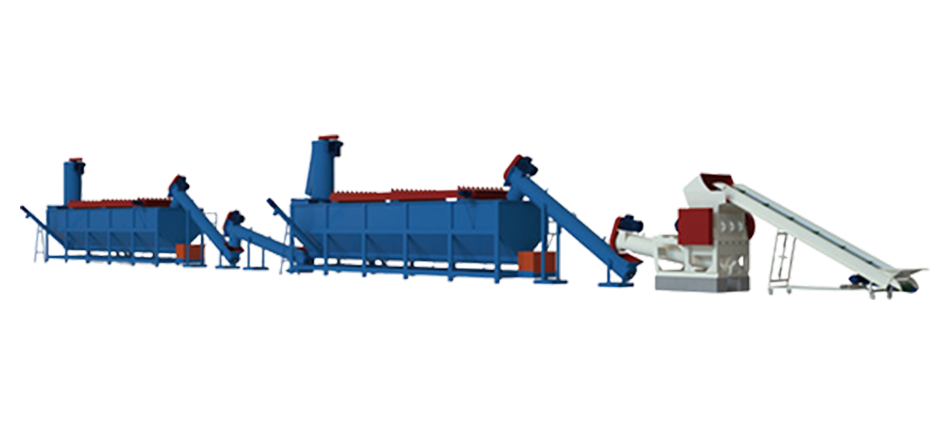
It depends on the contamination level. Clean production waste can often go directly to granulation with melt filtration. Post-consumer bags—especially those used for cement, fertilizers, or chemicals—typically require washing to remove contaminants that would otherwise degrade pellet quality. Check the rigid plastic recycling and washing line for reference on washing configurations.
What causes black specks in recycled PP pellets from woven bags?
Black specks are usually caused by degraded polymer (burned material) or carbonized contaminants that pass through the screen pack. Common causes include:
-
Overheating in the extruder
-
Excessive residence time
-
Contaminants that are too fine to be filtered out
-
Inadequate screen pack mesh size
What is the typical temperature range for extruding PP woven bags?
PP typically melts between 160°C and 220°C. The exact temperature depends on the specific PP grade, the presence of additives, and the desired melt viscosity. Higher temperatures improve flow but increase the risk of degradation. Temperature should be verified through testing with the actual material.
Is two-stage extrusion necessary for woven bag recycling?
Two-stage extrusion (a primary extruder followed by a secondary extruder with filtration) is not always necessary but is recommended for post-consumer materials requiring high filtration efficiency. Clean production waste can often be processed with a single-stage system.
How does the woven structure affect the granulation process?
The woven structure means the material does not melt as uniformly as film or rigid plastics. The individual tapes or yarns need sufficient residence time and shear to fully melt and homogenize. Inadequate melting can result in unmelted “fish eyes” in the final pellets, which affect downstream processing.
Conclusion
Recycling PP woven bags through granulation is a viable way to recover valuable polypropylene material, but the process requires careful attention to feedstock characteristics, contamination levels, and process parameters. The key takeaways are:
-
Feedstock assessment is the first step: Clean production waste and contaminated post-consumer bags require very different approaches.
-
Contamination control determines pellet quality: Adequate filtration—and washing when necessary—is essential for producing marketable pellets.
-
Process parameters must be verified: Temperature, screw design, and residence time should be confirmed for the specific material being processed.
-
Equipment choices depend on scale and quality targets: There is no single “best” configuration; the right setup depends on material, output, and application requirements.
For a detailed overview of available recycling configurations and to discuss specific material and production requirements, review the complete waste plastic recycling solutions overview.


 Download
Manual
Download
Manual Video
Video



 Connect: