As global plastic waste accumulation continues to strain ecological governance and industrial waste disposal chains, modern waste plastic recycling and granulation system has become an indispensable core facility for manufacturing enterprises, waste treatment factories and renewable resource enterprises in 2026. Factory owners and environmental protection managers are actively seeking low-energy, low-pollution and high-yield recycling methods to comply with updated international carbon neutrality policies and local waste discharge standards. This article sorts out five pivotal development directions reshaping the plastic recycling sector this year, combining real industry data and on-site production experience to help practitioners grasp transformation opportunities and avoid investment mistakes in equipment upgrading.
Low-carbon & Energy-saving Transformation Becomes Industry Hard Threshold
Carbon emission control is no longer a optional optimization item but a rigid access standard for global plastic recycling factories in 2026. According to the latest data released by European Plastic Recyclers Association (EPRA), traditional backward plastic processing equipment causes 32% higher energy consumption per ton of recycled materials than new generation intelligent models. Many small and medium-sized recycling plants are facing rectification pressure due to excessive power consumption and unqualified flue gas emission.
More manufacturers begin to replace single-function melting and crushing equipment with integrated combined units that support frequency conversion adjustment and waste heat recovery. These upgraded units can cut down comprehensive operating costs by 18%-25% in long-term operation, which is crucial for enterprises with thin profit margins in the recycled plastic market. For factories with limited renovation budget, phased equipment optimization is also a practical and cost-effective way.
Intelligent Automatic Operation Reduces Labor Dependence
Labor shortage and rising manual management costs have long plagued the recycled plastics processing industry. In the past, plastic sorting, impurity removal, melting extrusion and granulation links required a large number of skilled workers, bringing unstable production efficiency and manual operation errors.
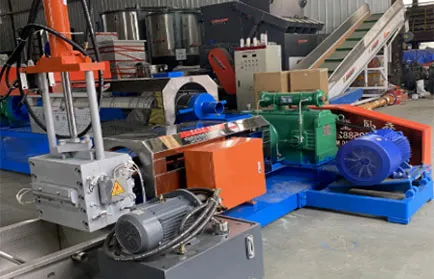
2026 plastic recycling technology focuses on full-process automatic monitoring and intelligent identification technology. Advanced sensor modules and visual recognition systems can automatically screen mixed waste plastics, filter impurities such as paper scraps, metals and sediment, and adjust operating parameters in real time according to material humidity and thickness. Unattended continuous production has gradually become mainstream in large and medium-sized recycling bases. This intelligent upgrade not only stabilizes product quality but also greatly reduces safety risks in high-temperature processing workshops.
Mixed Plastic Efficient Separation Technology Breaks Material Limitations
A key pain point of traditional plastic recycling lies in the difficult treatment of mixed waste plastic materials. Most small devices can only process single-type plastic films or hard plastics, resulting in a large amount of mixed waste plastics being discarded or incinerated, which wastes resources and pollutes the environment.
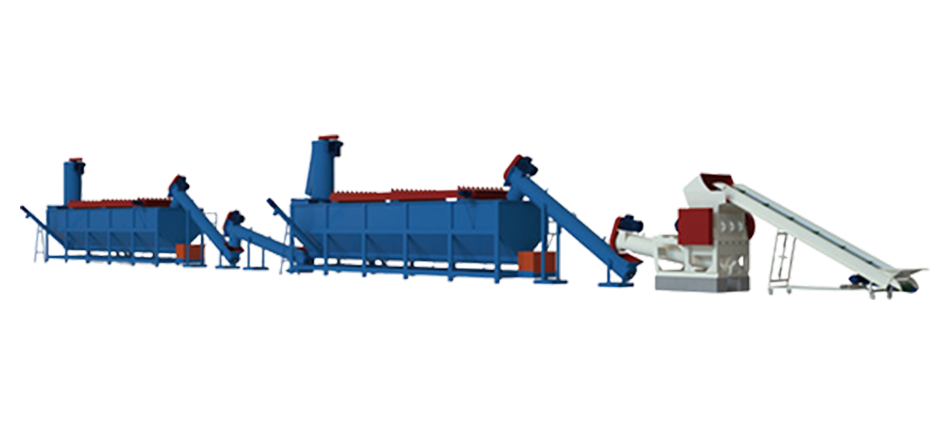
With the iteration of physical separation and environmental protection cleaning technology, the new generation of processing equipment achieves efficient classification of PP, PE, PET and multi-layer composite plastics. The optimized water circulation cleaning structure also realizes closed water circulation, reducing water resource waste and sewage discharge pressure. This technological breakthrough greatly expands the recycling scope of raw materials, allowing waste recycling enterprises to collect more types of raw materials and improve overall market competitiveness.
High-purity Regenerated Particle Production Meets High-end Market Demand
Downstream industries such as plastic packaging, daily chemical products and building materials have raised stricter requirements for the purity and stability of reprocessed plastic particles. Low-quality recycled particles with high impurity content can only be used in low-end rudimentary products, with low added value and limited sales channels.
In 2026, major equipment brands focus on polishing, secondary filtration and fine granulation technology research and development. High-precision filtration design effectively removes tiny impurities and peculiar substances generated in the melting process, making finished recycled particles reach food-grade and industrial high-standard application standards. Moving from low-value crude processing to high-value refined production has become the core profit growth point for the sustainable development of recycling enterprises.
Modular Equipment Design Adapts To Diversified Production Scenarios
Different from the unified large-scale assembly line design in the past, modular and split-type equipment design is widely recognized in the current market. Many recycling enterprises have differences in factory area, daily output, material types and local environmental protection requirements, and rigid integrated equipment often cannot adapt to personalized production needs.
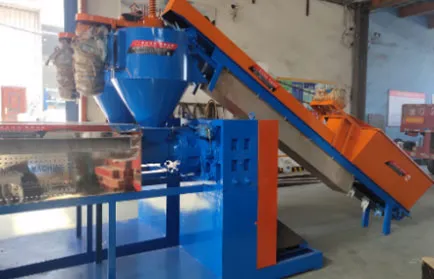
Modular units can be freely combined, disassembled and expanded according to actual demands, covering small workshop decentralized processing and large industrial centralized production scenarios. Meanwhile, the split structure simplifies daily maintenance and later component replacement, greatly reducing equipment maintenance time and after-sales cost. When selecting processing equipment, users pay more attention to scalability and scene adaptability, rather than simply pursuing large output parameters.
Professional Solution Comparison & Practical Selection Suggestions
When updating production lines, many buyers will hesitate between simple small recycling machines, traditional integrated granulation equipment and systematic customized processing solutions. Simple small devices have low initial investment, but they have obvious defects such as high energy consumption, poor environmental protection performance and single material adaptability, and are easy to be eliminated by policy upgrading. Traditional integrated equipment has stable performance but poor flexibility, difficult to transform and unable to cope with changing raw material types.
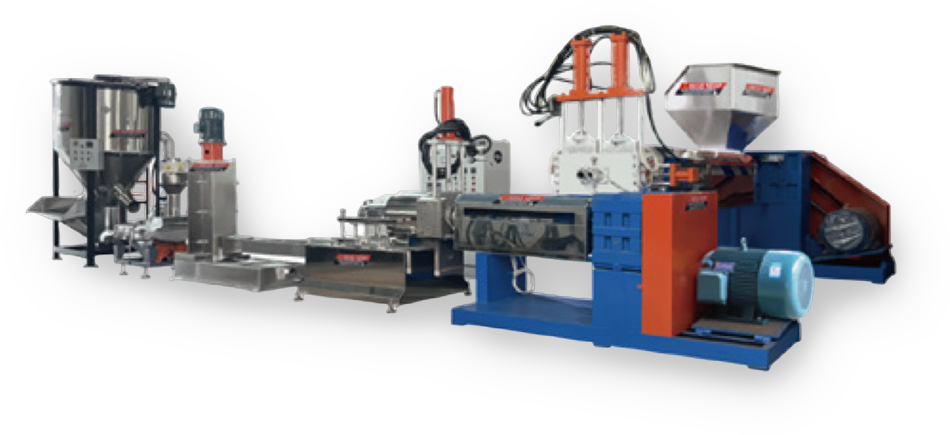
In contrast, the mature waste plastic recycling and granulation system launched by Rehoboth perfectly balances environmental protection, efficiency, intelligence and scalability. Compared with ordinary competitive products, this set of solutions adopts thickened wear-resistant structural materials, international brand core electrical components and independent dust and flue gas purification modules. It can stably operate for a long time in high-intensity working conditions, and supports personalized function customization according to customer regional environmental protection standards and material characteristics.
For regional agents and factory investors, customized after-sales services including on-site installation, operator training and regular remote maintenance are also key advantages that distinguish premium brands from ordinary manufacturers. This one-stop service model effectively solves the pain points of difficult operation and troublesome maintenance for many new entrants in the recycled plastic industry.
Closing
The plastic recycling industry is stepping into a refined, low-carbon and intelligent new era in 2026. The five major trends mentioned above are not only technological innovations, but also important guidelines for enterprises to respond to policies, reduce costs and expand profit space. Blindly sticking to backward processing modes will gradually lose market advantages, while actively embracing new technologies and high-quality systematic solutions is the long-term way to survive and develop.
Each enterprise can combine its own production scale, raw material types and budget plans to complete equipment upgrading and technological iteration step by step. For more professional industrial equipment configuration and industry trend analysis, you can always pay attention to Rehoboth’s latest technical updates and industry practical cases.


 Download
Manual
Download
Manual Video
Video



 Connect: