Walk onto any bottling floor during peak season, and you will hear the same stress point: the infeed air conveyor stuttering because preforms are sticking. The operator shouts, "Dust. Again." Production stops. Ten minutes lost. Multiply that by three shifts, five lines, and suddenly a "minor dust issue" has cost you an entire production day.
For bottlers who process their own recycled content—or those using returnable bottle programs—the washing line is not a recycling footnote. It is the first quality control gate. And when it fails, your filling line pays the price.
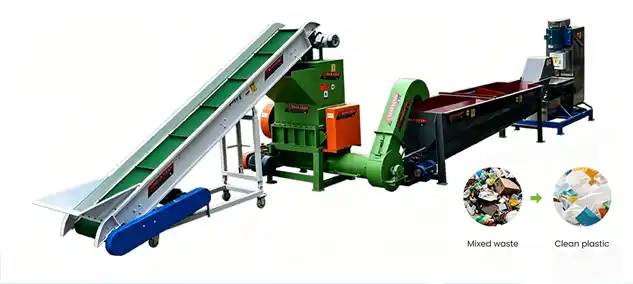
What Bottlers Actually Need from a Washing Line
A bottler does not need "high throughput." A bottler needs predictable preform cleanliness. Period.
If washed flakes carry residual glue, label fibers, or caustic chemicals, those contaminants survive the extrusion process. They become black specs in the preform wall. During blow molding, those specs create weak points. In the worst case, a bottle bursts during filling—flooding your filler, shutting down the line, and triggering a full sanitation protocol.
According to beverage industry quality standards (ISO 22000 guidelines for packaging), visible particles inside a finished container constitute a critical non-conformance. Recalling a single batch costs an average of $50,000 for a mid-sized regional bottler. A washing line that introduces defects is not saving money. It is creating liability.
The Three Hidden Demands Bottlers Place on Washing Lines
Most equipment discussions focus on kilograms per hour. But for a bottling plant manager, the real metrics are different.
1. Chemical Residue Tolerance
Your filling line's sanitation protocol expects a certain pH level on container surfaces. If the washing line's rinse stage is inefficient, trace sodium hydroxide (caustic) remains on the flake. That caustic later leaches into the bottle wall. In carbonated beverage applications, residual alkalinity can accelerate stress cracking—bottles failing along the base petaloid area after two weeks on a shelf. A properly configured integrated system includes a neutralization stage with real-time pH monitoring before the final rinse.
2. Mechanical Compatibility with Extrusion Lines
Not all washed flakes feed the same. A washing line that outputs inconsistent flake bulk density forces your extruder screw to constantly adjust torque. This leads to melt temperature fluctuations. For a bottler running in-house preform molding, those fluctuations produce preforms with uneven wall thickness. The result? Bottles that wobble on the filling line conveyor or fail capping torque tests. The washing line's dewatering and drying stages directly control this bulk density consistency.
3. Traceability and Contamination Documentation
When a retailer finds a foreign object in a beverage bottle and traces it back to your plant, you need answers within hours, not weeks. Modern washing systems equipped with automated contaminant logging can tell you exactly which batch of input material ran through the hot washer at 3:00 AM on Tuesday. This traceability is not a luxury. It is becoming a compliance requirement under extended producer responsibility (EPR) frameworks in the EU and several US states.
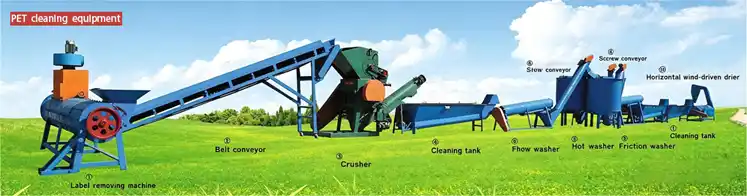
Why "Serving Bottlers" Changes How You Specify Equipment
A standard recycling line prioritizes volume. But when the customer is a bottler, priorities shift.
For example, consider the friction washer design. A typical line uses aggressive rotor speeds to strip labels quickly. However, aggressive speeds generate micro-fines—tiny PET particles that look like dust. That dust carries over into extrusion, becomes charred in the barrel, and ends up as black specs. A bottler-focused washing line uses staged friction washing: slower initial speeds to remove labels without creating fines, then a second stage for remaining contaminants.
This is where understanding the full system architecture matters. The goal is not just clean flakes. The goal is flakes that behave predictably in your specific preform molding process. If your washing line supplier cannot tell you how their equipment's output affects IV (intrinsic viscosity) retention during extrusion, they are not thinking like a bottler's partner.
The Maintenance Reality for Bottling Plants
Bottling plants run 24/6 schedules. Your washing line cannot afford a three-day teardown to change screens.
Here is what bottlers have learned from field experience: modular designs with quick-release screen baskets and externally adjustable rotor gaps reduce weekly maintenance from four hours to 45 minutes. That difference matters when your production planner has scheduled back-to-back runs of still water and sparkling juice—two products with different preform specifications.
One large European spring water bottler reported cutting their washing-related downtime by 62% after switching to a system with independent drive monitoring on each washing module. The insight came not from the equipment brochure, but from analyzing shift logs: most stoppages occurred during label ring removal, not the wash stage itself.
So, how does a bottler evaluate washing line options correctly?
You need data that speaks to your filling line, not just your granulator. Ask potential suppliers three specific questions:
-
What is your residual glue spec (mg per kg of flake), and how do you validate it each shift?
-
How does your drying stage prevent moisture migration during flake storage (critical for preventing hydrolysis before extrusion)?
-
Show me your contaminant detection log from a live production run—not a pilot plant test.
If a supplier cannot answer these, they are selling a recycling machine. You need a solution that serves your bottling operation.
For facilities ready to move beyond component-level thinking, comparing fully integrated systems against legacy setups often reveals surprising operational advantages. You can review technical specifications designed specifically for bottle-to-preform applications to see how process integration affects final container quality metrics.
The Bottom Line for Bottlers
A washing line serves you when it makes your filling line boring. Boring means no unexpected stops. No random black specs. No pH surprises. No traceability gaps. When your production meetings stop mentioning "flake quality issues," that is when your washing line is doing its job.
If you are currently experiencing unexplained preform rejects or intermittent filling line jams, look upstream. The root cause might not be your blow molder or filler. It might be how your washing line is—or is not—serving your bottling needs.
*What is the most unexpected contaminant you have found in your recycled flake that made it past your washing stage? For bottlers running high-speed lines (40,000+ bottles per hour), even a single spec per 10,000 preforms is too many. That threshold requires a different washing philosophy.*


 Download
Manual
Download
Manual Video
Video



 Connect: