Moisture carryover from the washing stage is one of the most common and underestimated causes of unstable pelletizing and inconsistent pellet quality. While most operators focus on sorting, washing intensity, and granulation temperature, residual moisture in washed flakes can quietly undermine every downstream step. The acceptable moisture level before pelletizing depends on polymer type, flake form, and the pelletizer's degassing capability—it should be confirmed through representative testing rather than assumed from a fixed number. This article explains how moisture moves through the cleaning and granulation recycling system, what happens when it is not controlled, and which checks help buyers and operators keep the wash-to-pellet transition stable.
Why Moisture Is a System-Wide Issue, Not Just a Drying Problem
In a waste plastic cleaning and granulation recycling system, water is used at multiple stages: pre-washing, friction washing, rinsing, and density separation. Each stage leaves residual water on flake surfaces and, in the case of film and woven materials, trapped within the material matrix. Mechanical dewatering—centrifuges, screw presses, or squeeze dryers—removes the bulk of free water, but a portion remains as surface film or absorbed moisture.
This residual moisture does not stay put. When flakes enter the pelletizer, that water flashes into steam inside the extruder barrel. The consequences depend on how much water is present and how well the pelletizer is configured to handle it.
What Happens When Wet Flakes Enter the Pelletizer
Excessive moisture in the feed creates several predictable problems:
Unstable extrusion pressure. Water vaporizes inside the barrel and creates pressure fluctuations that disrupt the melt flow. In film plastic recycling lines with compacting and direct pelletizing stages, this instability is especially pronounced because the feed material has already passed through a densification step that can trap moisture.
Poor pellet surface quality. Water vapor that does not escape through the degassing system becomes trapped in the polymer melt, producing pinholes, surface roughness, or internal voids in the finished pellets.
Higher filtration load. Moisture can carry dissolved contaminants and fines further into the filtration stage, increasing screen changes and reducing output.
Energy waste. A substantial portion of the heating energy in the extrusion section is consumed evaporating residual water instead of melting polymer.
Risk of degradation. For temperature-sensitive materials, the additional residence time required to drive off moisture can push the polymer into a degradation window, affecting color, molecular weight, and mechanical properties.
None of these outcomes has a single numeric threshold. The point at which moisture becomes problematic varies by polymer, flake thickness, pelletizer screw design, and degassing configuration.
Where Moisture Control Actually Happens
Moisture control is not one piece of equipment—it is a chain of decisions across the cleaning and granulation recycling system:
1. Dewatering stage selection. Different dewatering methods remove different amounts of water. Centrifugal dewatering and screw pressing are common for rigid flakes; squeeze drying or mechanical pressing is more typical for film and woven materials. The choice affects the moisture level entering the thermal drying stage.
2. Thermal drying configuration. Hot air drying, fluidized bed drying, or thermal drying drums each have different moisture removal capabilities. The drying target should be set based on the pelletizer's moisture tolerance, not on a generic "dry enough" standard.
3. Material transfer and storage. Flakes that are dried to an acceptable level can reabsorb moisture if stored in humid conditions or transferred through open systems. The interface between drying and granulation matters as much as the drying itself.
4. Pelletizer degassing capacity. The extruder's vacuum degassing or atmospheric venting capability determines how much residual moisture the pelletizer can tolerate. A pelletizer with limited degassing requires a drier feed; a pelletizer with robust vacuum degassing can accept slightly higher moisture levels but at a cost in energy and throughput.
A Practical Comparison: Drying Approaches for Different Feedstocks
| Feedstock type | Typical dewatering method | Drying stage focus | Moisture-related risk |
| PE/PP film, bags | Mechanical squeeze or press drying | Hot air or thermal drying; film traps moisture in layers | Higher risk of trapped moisture; requires more aggressive drying |
| Rigid HDPE/PP regrind | Centrifugal dewatering | Hot air drying; surface moisture is easier to remove | Lower risk if dewatering is properly maintained |
| PET flakes | Centrifugal dewatering + thermal drying | Precise moisture target before extrusion; PET hydrolyzes if moisture is too high | Critical—PET requires very low moisture to avoid IV loss |
The table is indicative; actual drying requirements should be confirmed with representative material testing.
Signs That Moisture Is Causing Problems
Operators can identify moisture-related issues before pellet quality fails:
-
Visible steam or vapor at the die head. This is the most direct indicator that the feed is wetter than the pelletizer can handle.
-
Fluctuating amperage on the extruder motor. Water flashing in the barrel creates torque variations.
-
Frequent screen changer cycling. Moisture carries fines and contaminants that load the filtration system faster.
-
Pellets with surface defects or internal bubbles. Post-production inspection reveals moisture-related quality loss.
-
Inconsistent pellet dimensions. Unstable melt pressure from moisture causes die flow variation.
If these signs appear, the first step is not to increase extruder temperature. Higher temperature can drive off moisture faster but also increases degradation risk. The correct response is to check the drying stage output and the material transfer path.
What to Check Before Adjusting the Pelletizer
When moisture is suspected, work backward through the line:
Check 1: Dewatering equipment condition. Worn screens, damaged press rollers, or clogged centrifuge baskets reduce dewatering efficiency. A dewatering unit that was performing adequately six months ago may have degraded gradually.
Check 2: Drying air temperature and residence time. If the drying stage is not reaching its set temperature, or if material passes through too quickly, moisture removal drops. Thermocouple calibration and airflow checks are part of routine maintenance.
Check 3: Material transfer path. Open conveyors, poorly sealed transfer points, and humid ambient conditions can reintroduce moisture after drying.
Check 4: Feedstock consistency. A change in incoming material—thicker film, different polymer mix, higher contamination—can overwhelm a drying stage that was sized for a different feedstock profile. The correct configuration depends on polymer type, bulk density, contamination, and moisture, and should be confirmed against representative feedstock.
Maintenance Checklist for Moisture Control
| Frequency | Check item | What to look for |
| Daily | Drying air temperature | Within set range; no drifting |
| Daily | Visible moisture at pelletizer feed | Steam, clumping, wet spots |
| Weekly | Dewatering screens and baskets | Wear, clogging, damage |
| Weekly | Transfer system seals and covers | Gaps, worn gaskets, open sections |
| Monthly | Thermocouple and sensor calibration | Accuracy within tolerance |
| Monthly | Drying airflow and exhaust | Blocked ducts, reduced flow |
| Per batch change | Feedstock moisture sample | Compare against baseline for that material |
This checklist covers the moisture-control interface specifically. Broader washing line maintenance and pelletizer upkeep follow separate schedules.
When Drying Alone Is Not Enough
Sometimes the moisture problem is not in the drying stage but in the material itself. Film with high ink loading, woven bags with residual coatings, or heavily contaminated post-consumer rigid plastics can hold moisture in ways that standard drying cannot fully address. In these cases, the solution may involve:
-
Adjusting the upstream washing stages to reduce water absorption
-
Adding a pre-drying or conditioning step before the main dryer
-
Selecting a pelletizer with higher degassing capacity, such as those designed for film and low-bulk-density materials
-
Re-evaluating whether the feedstock is suitable for the intended pellet application
For film-based feedstocks in particular, the interaction between washing, dewatering, and pelletizing is tightly coupled. Reviewing the available configurations for film processing can help clarify which drying and pelletizing combination fits a specific material profile.
FAQ
Q: What is an acceptable moisture level for plastic flakes before pelletizing?
There is no universal number. Acceptable moisture depends on polymer type, pelletizer degassing capacity, and the intended pellet use. PET typically requires very low moisture to prevent hydrolysis, while some polyolefin pelletizers can tolerate higher levels. The target should be confirmed with the pelletizer supplier based on representative material testing.
Q: Can a pelletizer handle wet flakes without a separate drying stage?
Some pelletizers with strong vacuum degassing can process flakes with higher moisture, but this increases energy consumption and may affect pellet quality. For consistent output, a dedicated drying stage is generally recommended. The decision depends on the specific pelletizer configuration and the required pellet specification.
Q: Why do my recycled pellets have bubbles or surface defects even after drying?
Residual moisture is one cause, but not the only one. Trapped volatiles from printing inks, adhesives, or degraded polymer can produce similar defects. Check whether the drying stage is actually achieving its target moisture level, and also review the feedstock composition and pelletizer degassing performance.
Q: How often should drying equipment be inspected?
Daily checks of temperature and visible moisture, weekly checks of dewatering components, and monthly calibration of sensors are practical starting points. The schedule should be adjusted based on operating hours, feedstock abrasiveness, and the criticality of moisture to final pellet quality.
Q: Does higher drying temperature always mean better moisture removal?
No. Higher temperature can remove surface moisture faster but may not address moisture trapped inside film layers or woven structures. Over-drying can also waste energy and, for some polymers, cause surface oxidation. The drying temperature and residence time should be matched to the material and the required moisture target.
Q: What information should I prepare before contacting a supplier about moisture issues?
Prepare a description of the feedstock (polymer type, form, typical contamination), the current drying equipment and settings, the moisture level you are observing, the pellet quality issue, and the pelletizer model and degassing configuration. Representative material samples help the supplier evaluate the situation more accurately.
Conclusion
Moisture control in a waste plastic cleaning and granulation recycling system is a system-level responsibility, not a single equipment setting. The most important checks are the dewatering stage condition, the drying stage performance, and the transfer path between them—all evaluated against the specific feedstock and pelletizer configuration.
The most common mistake is treating moisture as a pelletizer problem and responding with higher extrusion temperatures. That approach can mask the symptom while increasing degradation risk.
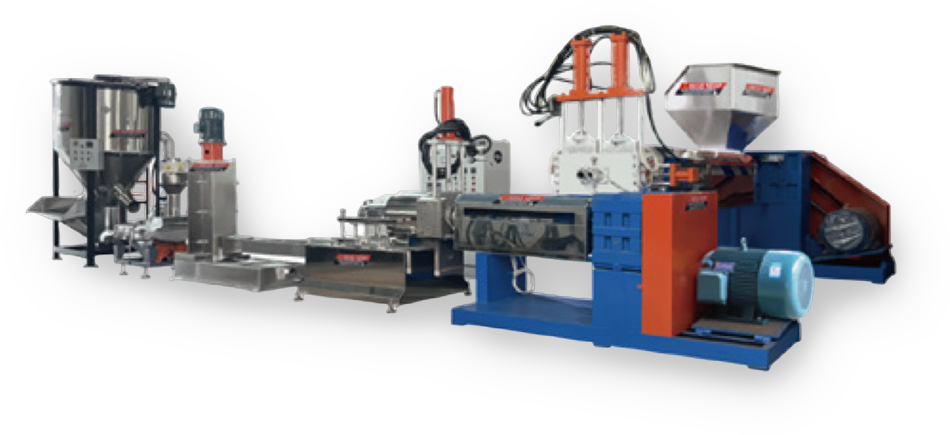
When pellet quality issues persist despite drying adjustments, the next step is to review the material profile, the drying equipment condition, and the pelletizer's degassing capability together. For film-based feedstocks, reviewing how the film plastic recycling line handles the compacting, feeding, and degassing stages provides a practical reference for confirming whether the drying configuration matches the material. Discussing the specific material and production requirements with a technical team can help identify whether the issue is in the drying stage, the pelletizer, or the interface between them.


 Download
Manual
Download
Manual Video
Video



 Connect: