If you type "plastic recycling pelletizer" into a search bar, most results will show you shiny machines chewing through milk jugs. But here’s what nobody tells you: the machine that crushes 5mm rigid flakes beautifully will choke on a grocery bag in under 10 minutes. So the real question isn’t which brand to buy—it’s whether your feedstock is film (soft, stretchy, low bulk density) or rigid (bottles, crates, pipes). Get this mismatch wrong, and you’re not recycling plastic; you’re just making expensive confetti that clogs every filter downstream.
Why Your Current Granulator Hates Your Film Waste
Let me paint a familiar scene. You run a post-industrial recycling line collecting stretch wrap from warehouses. You feed it into a standard single-shaft shredder designed for purgings and chunks. Within an hour, the screen clogs. The rotor wraps itself in a plastic burrito. You spend three hours with a utility knife cutting it free.
That happens because film materials have high surface area-to-mass ratio. They don't break cleanly; they smear, melt, and wrap. According to a 2022 AMI Consulting report on flexible packaging recycling, nearly 40% of unplanned downtime in small-to-mid recycling operations comes from film bridging and rotor wrapping—not motor failure. The solution isn't more horsepower. It's different cutting geometry and pneumatic assisted feeding.
The Rigid Side: Crates, Drums, and Injection-Molded Scrap
Now flip the coin. You process rigid plastic waste—think broken pallets, industrial drums, or automotive trim scraps. These materials don't wrap, but they do punch back. A low-torque film granulator will stall instantly when a 10mm wall section hits the rotor. You need heavy-duty knives, hydraulic pusher systems, and a screw-fed throat to force feed those chunks.
What surprises most buyers? Temperature sensitivity. Rigid ABS and polycarbonate generate friction heat fast. If your size reduction system doesn't have water-cooled chambers, the material will soften inside the cutting box and turn into a solid brick. I've watched it happen during a demo in Ohio—$80,000 of machinery stopped by 50 pounds of overheated PC/ABS blend.
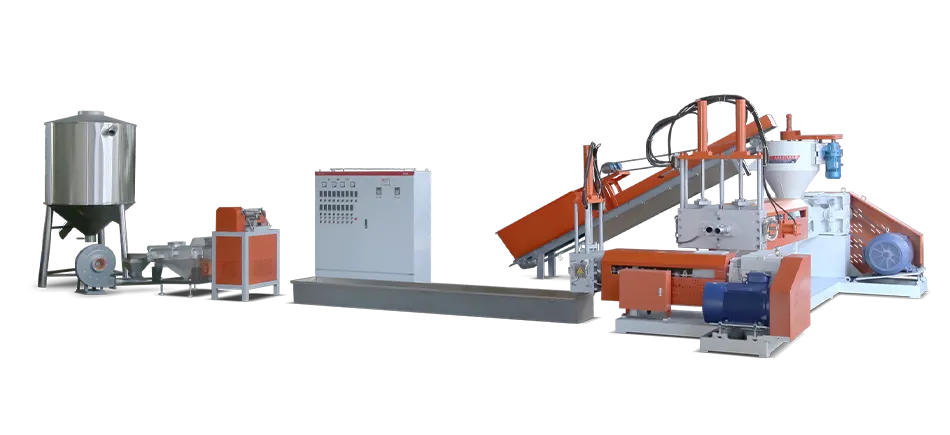
Feedstock Assessment: The "5-Finger Test" You Should Do Right Now
Before you call any supplier, walk to your scrap pile. Grab a handful. Ask three questions:
-
Does it stretch more than 20% before tearing? – That's film. Look for low-bulk-density granulators with open rotors and air sweeps.
-
Can you hear a solid thud when you drop a piece on concrete? – That's rigid. You'll need high-inertia rotors and pre-cutting stations.
-
Is it mixed? – Films with rigid labels. Rigid parts with film over-wrap. This is where most systems fail. You either need a separation pre-wash or a dual-stage cutter compactor.
A plastic recycling pelletizer that handles mixed streams is rare. Most are optimized for one or the other. The ones that claim "universal" usually mean "mediocre at everything."
Single-Stage vs. Twin-Stage: The Honest Trade-Off
Here's where engineering gets real. A single-stage cutter compactor (often called a cutter-compactor) uses friction heat to densify film into melt before cutting. Excellent for LDPE, LLDPE, and PP woven bags. Terrible for rigid—because rigid pieces don't densify; they bounce.
A twin-stage system separates the actions:
-
Stage one: A low-speed shearing rotor reduces input to 20-30mm flakes.
-
Stage two: A high-speed granulator finishes the job.
For film-only lines, the single-stage wins on energy (about 30% less kWh per ton). For rigid-only or mixed streams, twin-stage wins on uptime. What do I recommend for most small-to-medium recyclers handling post-consumer waste (which is always contaminated and mixed)? Twin-stage with a metal detector before stage one. That extra $8,000 sensor pays for itself the first time it catches a stray screw.
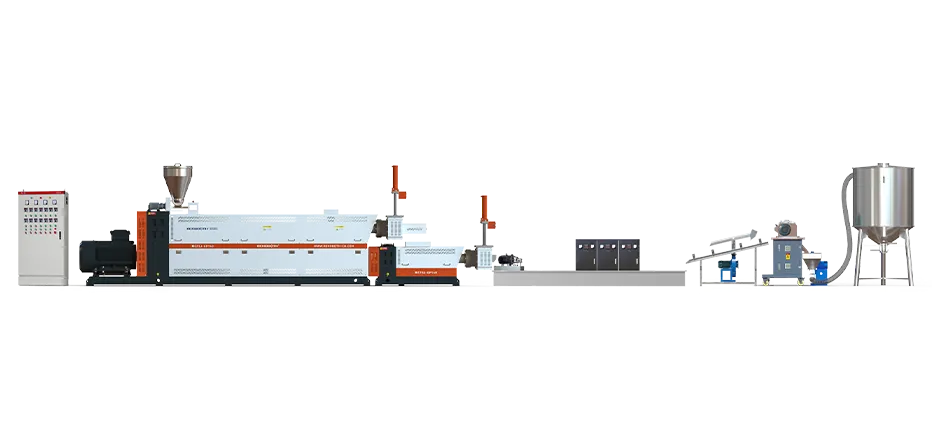
Why REHOBOTH Doesn't Sell You a "Standard" Pelletizer
Most suppliers ask, "What's your budget?" We ask, "Show me your last 1,000 kg of waste." That's the only honest starting point. Because feedstock changes everything—from knife material (D2 vs. HSS vs. carbide-tipped) to screen hole size (6mm for film, 14mm for rigid chunks) to discharge auger pitch.
One client processed printed shrink wrap from a beverage plant. The ink content caused filter clogging every 45 minutes. Our solution wasn't a bigger machine. It was a pre-condensation chamber and a screen changer with backflush.
Another case: a recycler of automotive carpet backing (a nightmare mix of nylon fibers, PP film, and calcium carbonate). Standard knives dulled in two shifts. We switched to tungsten carbide inserts and added a dust extraction port. Throughput tripled.
The Hidden Cost You're Not Calculating: Knife Changes
Ask any plant manager what they hate most. It's not downtime. It's unplanned downtime. Knife sharpening intervals are the silent profit killer.
-
Soft film: sharpen every 150-200 tons.
-
Glass-filled rigid nylon: sharpen every 40-60 tons.
-
Mixed contaminated waste: unpredictable. Could be 20 tons; could be 80.
A truly flexible waste plastic reprocessing system gives you reversible rotor knives and quick-access cutting chambers—no need to pull the rotor. If a supplier can't show you a tool-less knife access door, walk away. That design flaw will cost you 12-15 maintenance hours per month.
When a Shredder-Granulator Combo Beats a Pelletizer
Let me say something controversial: you might not need a pelletizer at all. If your end product goes directly into injection molding or extrusion (and you have a melt filter downstream), a shredder-granulator combo producing dense flakes (8-10 mm) is cheaper to run and easier to maintain. Pelletizing adds melting, die-face cutting, and cooling—three more failure points.
So when do you actually need a full pelletizing line? When you're selling regrind on the open market (buyers want consistent 3-4 mm pellets) or when your downstream process requires dust-free, free-flowing feed. Otherwise, flakes work fine. Don't let anyone upsell you on pellets you don't need.
The Right Fit Isn't a Model Number—It's a Conversation
Stop searching for "best plastic recycling pelletizer." Start documenting your infeed material—film-to-rigid ratio, moisture level, contamination type.


 Download
Manual
Download
Manual Video
Video



 Connect: