Plastic film recycling is a persistent headache for the recycling industry. While rigid plastics boast significantly higher recovery rates, plastic film recycling—think agricultural mulch, stretch wrap, and post-consumer packaging—languishes with global recovery rates often hovering in the single digits. You are likely searching for ways to process this tricky material without ending up with a melted mess or clogged machinery. The core problem lies in the film’s high surface-area-to-volume ratio, which leads to rapid oxidation and severe contamination, coupled with its "fluffy" nature that makes traditional feeding systems jam instantly. Without a dedicated approach, most film simply ends up in landfills or incinerators. But what if the solution isn't just a single machine but a thoughtfully engineered system designed to outsmart these physics-defying hurdles?
The Invisible Enemy: Why Traditional Equipment Fails with Flexible Packaging Waste
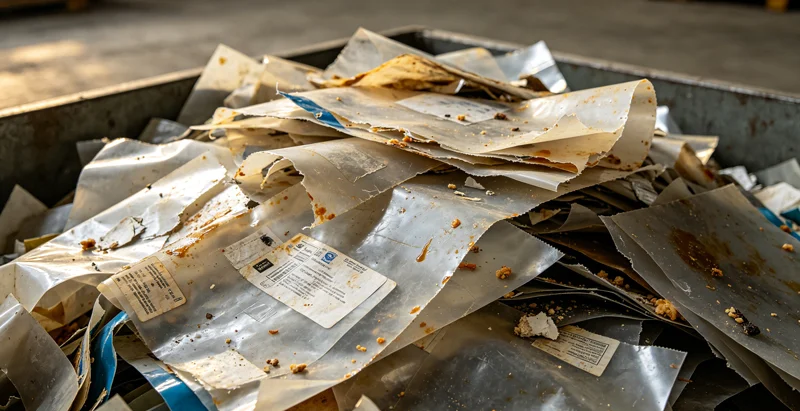
Standard granulators and extruders are built for dense, rigid materials. When you feed them post-consumer film waste, the outcome is predictable and frustrating. The material wraps around screws, bridges over hoppers, and its high moisture content—often exceeding 30%—turns the extrusion process into a steam-filled nightmare that degrades polymer chains. According to industry data, the global plastic recycling market is projected to grow substantially through 2030, yet flexible plastic packaging continues to be the most challenging segment due to these exact physical properties.
We see this every day: recyclers buy standard equipment only to find their output is riddled with "fish eyes" (unmelted particles) or black specs caused by burning. The core technical difficulty is volumetric feeding. Films have bulk densities as low as 50 kg/m³. You can't just drop them into a traditional single-screw extruder; they need to be pushed, compacted, and de-aerated simultaneously. This is where most recycling lines fail silently, costing operators thousands in downtime.
Regulatory Pressure and Market Trends Driving the Shift
The landscape is changing fast, and not just for environmental reasons. Extended Producer Responsibility (EPR) schemes are sweeping across Europe, North America, and parts of Asia, placing the financial and operational burden of plastic packaging waste management directly on brand owners and converters. If your business generates industrial scrap or handles municipal soft plastics, waiting is no longer an option—compliance deadlines are approaching.
Furthermore, the demand for high-quality recycled pellets (rPE, rPP) is rising. Major consumer goods companies have pledged to incorporate 25-30% recycled content in their flexible packaging by 2025. This creates a market pull for clean, consistent regrind. However, you cannot capture this value if your film pelletizing system produces degraded, low-MFI (Melt Flow Index) material. The market rewards consistency, and consistency starts with solving the contamination and feeding problems at the front end.
The Drying and Densification Dilemma
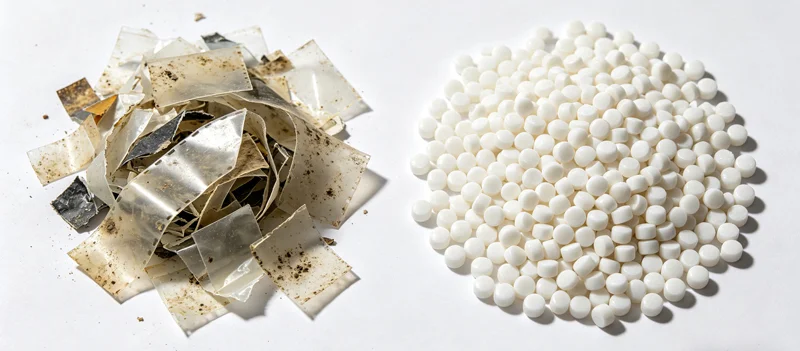
Let’s look at the typical process flow. You collect LDPE or LLDPE film. It arrives wet, dirty, and tangled. Standard mechanical recycling requires washing, but even after washing, surface moisture clings stubbornly to the thin material. If you send this directly into a melter, the water turns to steam at 100°C, while the plastic melts at 120-180°C. This steam creates bubbles, weakens the final pellet structure, and poses a safety risk in the extruder barrel.
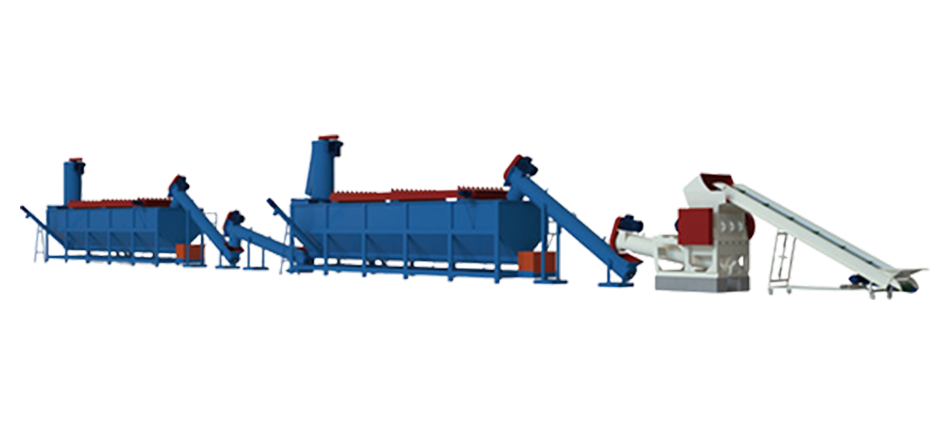
To solve this, the industry has moved away from simple crushers toward integrated lines featuring friction washers and thermal densifiers. A friction washer uses high-speed rotation to mechanically remove moisture and volatiles through centrifugal force, achieving surface dryness of up to 95% before the material ever hits the heat. But even then, the fluffy material refuses to flow. You need a "stuffing" mechanism—a forced feeder that pushes the low-bulk-density material directly into the screw root. Without this, your extruder simply starves.
Finding a Robust Solution: Moving Beyond Standard Granulators
After testing countless configurations across different plastic types, we have observed that the gap between standard recycling equipment and high-efficiency film plastic recycling lines is vast. Many manufacturers offer "universal" crushers, but these rarely handle the specific physical challenges of film. A cutter compactor or agglomerator is often marketed as a solution, yet these units typically run batch cycles, creating inconsistent feed rates and high energy spikes.
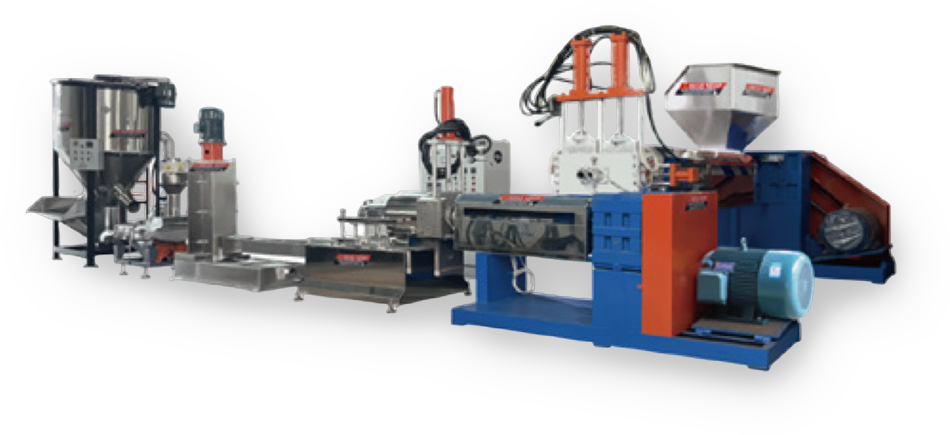
A more effective approach involves a continuous wet recycling system that integrates friction washing with a force-feeding extruder. This setup stabilizes the process by densifying the material immediately before melting. For recyclers processing heavily printed or laminated film, a double-stage filtration system (using a hydraulic screen changer) is non-negotiable. This removes ink residues and aluminum particles that would otherwise clog a standard single-piston filter within minutes.
What truly separates the successful operations from the failures is adaptability. Film waste is never uniform. Monday's load might be clean stretch wrap; Tuesday's could be agricultural film covered in soil and UV stabilizers. A rigid machine cannot handle this variance. The solution is modularity.
How REHOBOTH Addresses the Real-World Variables
This is where the philosophy behind the equipment matters. At REHOBOTH, we realized early on that film is not a material you can just "process." You have to outsmart it. Our approach is built on three pillars that directly counter the specific failure points mentioned above:
-
Synchronous Extrusion: Instead of relying on a standard single-screw to pull the film in, our main unit utilizes motor-driven dual rollers rotating synchronously. This creates a mechanical grip that forces the fluffy material downward, eliminating bridging. It essentially compresses the air out and shoves a solid slug of material directly into the barrel.
-
Recirculating Production: Screening out residue is critical. Our design includes a screening and crushing chamber that automatically filters oversized or unmelted particles. Rejected material is fed back into the system via a chain conveyor, mixed with fresh material, and reprocessed. This closed-loop design ensures that even if your feedstock is inconsistent, your final pellet quality remains stable.
-
Customized Power Configurations: We see competitors using undersized motors that stall under wet or heavy loads. Depending on the line configuration, we deploy main unit motors ranging from 37KW to 90KW, specifically tailored to the viscosity of the film being processed. If you are running high-bulk-density materials like PP non-woven fabric versus thin LDPE stretch film, the power demand is completely different. We adjust the screw length (up to 3.5m) and compression ratio accordingly, something standard machines cannot offer.
For those dealing with specialized contaminants, we offer custom modifications to the hydraulic screen changer and die head designs. You can explore the modular configurations available on the official product page to see how specific components are tailored for different film types.
Real-World Efficiency Gains: The Economic Case
Switching from a standard granulator to a purpose-built film line changes your financial model. Consider moisture removal. A standard dryer might get you to 5% moisture content. A friction washer and thermal densifier combination can get you below 0.5% before extrusion. That difference translates directly into extrusion speed. Lower moisture means you can run the screw at higher RPMs without the risk of steam explosions or hydrolytic degradation of the polymer.
Furthermore, the quality of recycled pellets determines their market price. "Off-grade" pellets contaminated with charred material might sell for 20-30% less than "prime" recycled pellets. The forced feeding system and dual-stage filtration ensure consistent melt pressure, producing uniform pellets with tight diameter tolerance. For manufacturers using these pellets to blow new film, consistency in pellet shape and density is critical for maintaining bubble stability on the blown film line.
Long-Term Support: When Things Get Sticky
Even the best hardware needs backup. One lesson learned from years in this industry is that film recycling is a 24/7 operation. When a screen pack clogs at 2 AM on a Sunday, you need parts, not excuses. REHOBOTH offers 24-hour online service and a 2-year warranty on major components like the gearbox and screw elements.
More importantly, we provide professional offline service and global agency consulting. If you are processing a specific type of industrial plastic scrap—say, metallized film or laminated pouches—standard settings won't work. We will travel to your site to adjust the screw configuration or the cutter compactor speed. This hands-on support is often the difference between a line that "works" and a line that is "profitable."
Conclusion: Moving From Problem to Profit
Film plastic is not going away. In fact, as e-commerce and flexible packaging continue to grow, the volume of this waste stream is only increasing. The traditional recycling industry has struggled with it because it defies the physics that rigid plastics obey. But by shifting focus from "crushing" to "densifying and feeding," these challenges become solvable engineering problems.
The key takeaway is this: Do not try to force film through a standard granulator. You need a system that compacts, dries, and pushes the material under positive force. Whether you are a converter looking to internalize scrap value or a municipality trying to meet EPR quotas, the technology exists. It just requires looking at the process holistically—from the wet, fluffy input to the dry, uniform pellet output. If you have a specific film type or contamination issue, explore the full range of configurations to find a match for your feedstock.


 Download
Manual
Download
Manual Video
Video



 Connect: