Quick Answer: To size a plastic recycling system correctly, start by calculating the saleable output you need per shift, not the rated capacity printed on a spec sheet. Then confirm that your feedstock polymer type and contamination level match the line configuration. Finally, estimate power cost using the installed motor power, expected utilization rate, and your local electricity tariff—not the peak nameplate figure. The three decisions are interconnected: material form drives capacity derating, and both determine energy demand. This guide walks through each step with practical formulas, comparison tables, and a pre-purchase checklist.
Why Rated Capacity Is Not Your Actual Output
Equipment spec sheets often list a single capacity number in kg/h. That number typically represents the highest throughput achievable under ideal laboratory conditions with a specific reference material. In real production, several factors reduce actual output:
- Material bulk density: Low-bulk-density materials such as PE film or woven bags feed less material per screw revolution than dense rigid regrind.
- Contamination level: Heavily printed, wet, or mixed-polymer feedstock requires more processing time and may reduce stable throughput.
- Required pellet quality: Higher filtration demand, tighter moisture targets, or stricter color consistency can slow the line.
- Operating schedule: Effective production hours per shift are always less than total scheduled hours.
Industry guidance suggests planning for an equipment utilization rate of approximately 70–80% of nameplate capacity in commercial operations. A common recommendation is to size the system for current peak volume plus a 20–30% margin for future growth, avoiding a capacity-limited retrofit during your first expansion cycle.
The capacity calculation formula:
Required line output (kg/h) = Target saleable output per shift ÷ Effective production hours per shift
Adjusted rated capacity = Required line output ÷ (Utilization rate × Material factor)
The material factor accounts for how easily a given feedstock reaches the rated throughput. A dense, clean, uniform regrind may achieve 0.85–0.95 of rated capacity; a wet, printed film with mixed polymers may only achieve 0.50–0.70. These figures vary by equipment configuration and should be verified through representative material trials.
Material Compatibility: What Determines Whether Your Feedstock Fits the Line
Plastic recycling systems are not universal. Material compatibility depends on polymer type, physical form, contamination profile, and moisture content.
Polymer compatibility overview:
| Polymer family | Typical forms | Key processing concern | Compatible line family |
|---|---|---|---|
| PE / PP film & bags | Blown film, woven bags, stretch film | Low bulk density, moisture, printing ink, volatile removal | Film plastic recycling line |
| Rigid PE / PP / PS / ABS / PA | Bottles, crates, injection parts, pipes | Particle consistency, contaminants, screen loading | Rigid plastic recycling pelletizer |
| PET (bottle-grade) | Washed flakes from upstream process | Moisture control, thermal history (IV degradation) | PET plastic recycling pelletizer |
| Mixed polyolefins | Post-consumer mixed rigid or film | Density separation, polymer compatibility | Washing line + granulation system |
| Heavily contaminated post-consumer | Mixed plastics, paper, metal, glass | Multi-stage sorting, washing, separation | Cleaning and granulation recycling system |
Polyolefins (PE and PP) are generally compatible with each other but have distinct melting points and viscosities. Blending them without proper compatibilization can lead to inconsistent pellet quality. PET and PVC are particularly problematic together—PVC degrades at PET processing temperatures and can cause black specks and acid formation. Polystyrene is often incompatible with polyolefins, leading to delamination in the final pellet.
Before finalizing a line configuration, verify the following material characteristics:
- Polymer identification: Use FTIR or DSC testing if feedstock is mixed or unknown.
- Bulk density: Measure loose bulk density in kg/m³. Values below approximately 200 kg/m³ typically require compaction or pre-densification.
- Moisture content: Test as-received and after washing. PET flakes typically need to be dried to below 0.5% moisture before extrusion to avoid IV loss and surface defects.
- Contamination profile: Identify labels, adhesives, sand, metal, and other non-polymer content. This determines the washing and filtration duty.
- Printing and coating: Significant ink loading may require additional degassing capacity.
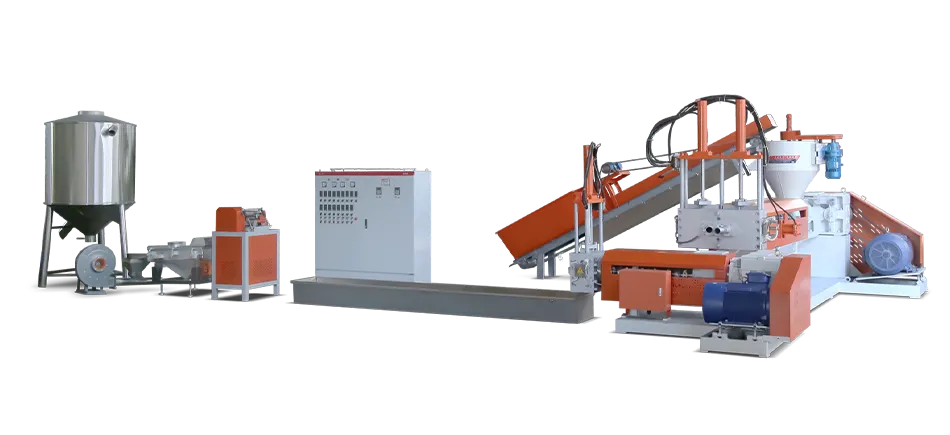
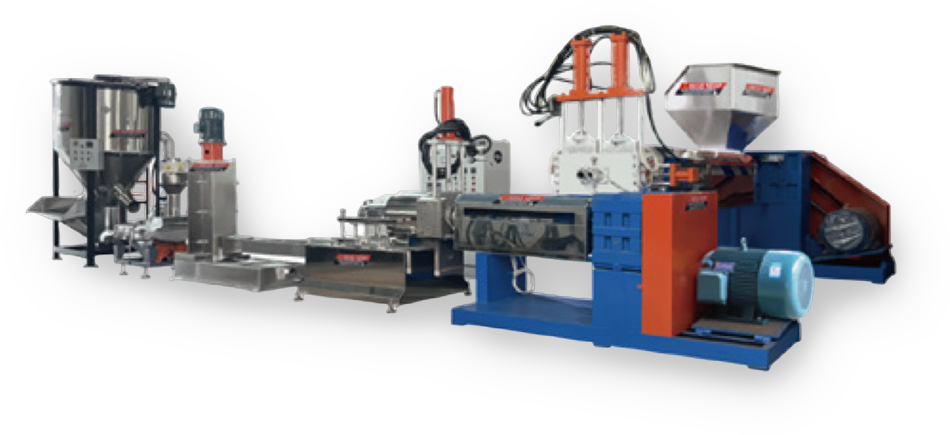
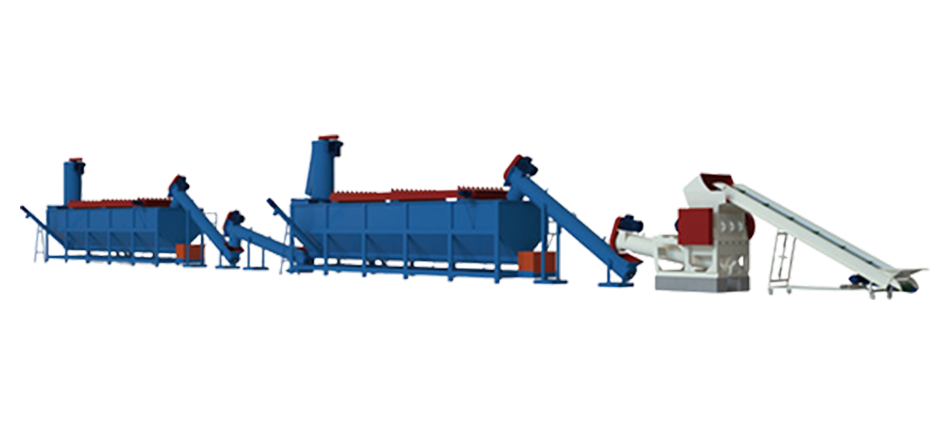
REHOBOTH provides dedicated line families for film, rigid, and PET feedstocks, with configuration options for pretreatment, feeding, extrusion, filtration, and pellet cutting. The correct configuration depends on your specific polymer type, contamination level, and required pellet output. You can explore the available configurations on the waste plastic recycling and granulation system overview page.
Power Cost Estimation: A Practical Framework
Electricity is typically the largest recurring operating cost in a plastic recycling line. Understanding how to estimate it before purchase prevents surprises after installation.
Step 1: Identify total installed motor power
Sum the rated motor power of all major driven components: shredder/crusher, extruder main motors (single or multi-stage), screen changer hydraulics, pelletizer motor, conveyors, blowers, dryers, and water pumps. This total appears in the equipment specification sheet.
Step 2: Apply a utilization factor
Installed power is not continuous consumption. Motors operate at partial load depending on throughput and material. A practical estimation approach uses the specific energy consumption (SEC) expressed in kWh per kg of output. Published figures for plastic recycling pelletizing systems generally fall in the range of 0.2–0.4 kWh/kg of finished pellet, depending on material, moisture, and line configuration. For a 500 kg/h line, this translates to approximately 100–200 kW of actual average power draw.
Step 3: Calculate annual energy cost
Annual energy cost = SEC (kWh/kg) × Annual output (kg) × Electricity tariff ($/kWh)
Example calculation (illustrative):
- Line output: 500 kg/h
- Effective hours per year: 4,000 (single shift × 250 days, adjusted for utilization)
- Annual output: 2,000,000 kg (2,000 tonnes)
- Estimated SEC: 0.30 kWh/kg
- Electricity tariff: $0.10/kWh
- Estimated annual power cost: $60,000
This is an estimation framework. Actual consumption depends on material, moisture, operating discipline, and line configuration. Buyers should request specific energy consumption data from the supplier and verify it with a representative material trial.
Energy-saving note: REHOBOTH's rigid plastic recycling and washing line incorporates variable frequency drives (VFDs) on motors and electromagnetic heating in the extrusion section. The product page states that electromagnetic heaters offer energy efficiency gains of approximately 30%–70% compared to traditional resistance heating coils. These figures are from the product specification and should be verified against actual operating conditions.
Pre-Purchase Checklist
Use this checklist when evaluating a plastic recycling system:
| # | Check item | What to verify |
|---|---|---|
| 1 | Feedstock polymer type | Single polymer, compatible blend, or mixed/unknown |
| 2 | Material form | Film, rigid, flake, woven bag, or mixed |
| 3 | Bulk density | Measured loose bulk density in kg/m³ |
| 4 | Moisture content | As-received and target after drying |
| 5 | Contamination profile | Labels, ink, sand, metal, adhesive, organics |
| 6 | Required pellet quality | Contamination limit, moisture target, IV retention (PET) |
| 7 | Required output | Saleable kg/h per shift, with 20–30% growth margin |
| 8 | Operating schedule | Effective hours/day, days/year |
| 9 | Available power supply | Installed capacity vs. site electrical capacity |
| 10 | Water supply and drainage | Flow rate, quality, recycling plan, discharge requirements |
| 11 | Floor space and height | Layout constraints for feeding, extrusion, pelletizing |
| 12 | Local environmental requirements | Emissions, wastewater, noise regulations |
| 13 | Wear part supply plan | Availability, lead time, cost of blades, screens, bearings |
| 14 | Maintenance access | Can all service points be reached safely? |
| 15 | Representative material trial | Request trial with your actual feedstock before purchase |
For a detailed review of system types and configuration options, visit the waste plastic recycling and granulation system category page. If your process requires washing before pelletizing, the cleaning and granulation recycling system page provides a comparison of washing line configurations.
FAQ
How do I calculate the capacity I need if I don't know my exact feedstock yet?
Start by working backward from your target monthly output. Estimate the average contamination level and moisture content based on supplier data or trial samples. Apply a conservative material factor of 0.60–0.70 to the rated capacity until you have test data. This provides a safer planning basis. Once you confirm the actual material, you can refine the capacity requirement.
Can one recycling line handle both film and rigid plastic?
Not typically in the same configuration. Film requires compaction or densification before extrusion due to low bulk density, while rigid regrind feeds directly into the extruder. Attempting to process both on a single line usually means compromising throughput and pellet quality for one or both materials. Dual-purpose configurations exist but require careful evaluation and often dedicated feeding sections.
What is the biggest hidden cost in a plastic recycling line?
Wear parts and downtime. Blades, screens, and barrel/screw components wear at rates that depend on material abrasiveness, contamination level, and throughput. A maintenance schedule built around your actual production data—not a generic supplier checklist—helps predict replacement intervals and avoid unplanned stops. Power cost is the largest continuous operating expense, but wear part management directly affects uptime and labor efficiency.
Does a washing line always need a pelletizer?
Not always. Some operations sell clean, dry flakes directly to downstream processors. However, pelletizing offers advantages in bulk density, handling convenience, and consistent feeding for the buyer's process. The decision depends on your target market and whether your buyers require pellets or accept flakes.
How do I verify capacity claims before signing a purchase contract?
Request a trial run with your representative feedstock. Define the measurement boundary (e.g., saleable pellet output at the end of the line, not crusher feed rate) and specify the required quality parameters. A capacity guarantee should be tied to a defined material specification and operating condition. Capacity should be verified as stable, acceptable finished output under defined conditions—not by the highest short-term feed rate.
What documents should I ask for during the technical confirmation stage?
Request the equipment specification sheet with motor power details, a general arrangement drawing for layout planning, a wear parts list with replacement intervals, and the recommended spare parts inventory for the first year of operation. For food-contact PET recycling, confirm that the line design and documentation address the relevant food-safety requirements for your target market.
Conclusion
Sizing a plastic recycling system correctly comes down to three interconnected decisions: how much saleable output you need, whether your material fits the line configuration, and what the power cost will be. Start with the output requirement, not the equipment capacity. Confirm material compatibility with representative samples. Estimate energy cost using specific energy consumption figures and your local tariff. Avoid the common mistake of selecting a line based on its highest rated capacity without accounting for real-world material factors and utilization rates.
Before finalizing any configuration, request a technical review with your actual material data. You can discuss your material and production requirements with the REHOBOTH technical team to confirm the appropriate line family and capacity range.


 Download
Manual
Download
Manual Video
Video



 Connect: