A few months ago, a recycling plant manager in Southeast Asia showed me two samples of recycled PP pellets. One was slightly rough, with a matte surface; the other was smooth, uniform, and almost identical to virgin material. The difference? One came from a dry granulation line, the other from a wet process. He had learned the hard way that the granulation method doesn’t just affect how the pellets look — it determines energy bills, maintenance frequency, and whether the final buyer accepts the batch.
If you’re processing post-industrial scrap with low contamination, you might lean toward simplicity. But the moment post-consumer bales enter the picture — think shampoo bottles, food trays, film with paper labels — things get complicated. Before locking in a pelletizing approach, most plant operators find themselves weighing far more than moisture content.
That’s where a clear, side-by-side look at dry and wet granulation becomes essential. And if your operation needs more than just a pelletizer — a fully synchronized system from shredding to finished pellets — a well-designed recycling and pelletizing plant can often remove the guesswork.
What “Dry Granulation” actually means in plastics recycling
In the plastics recycling world, dry granulation doesn’t mean zero moisture — it means the material is not intentionally brought into contact with water as a cooling or conveying medium during pellet formation. Strand pelletizing is the classic example: melt is extruded through a die, the strands are cooled in a water bath, but the cutting itself happens after the strands have been dried and solidified. Underwater pelletizing, which uses water to cut and cool the pellets simultaneously, belongs firmly in the wet category.
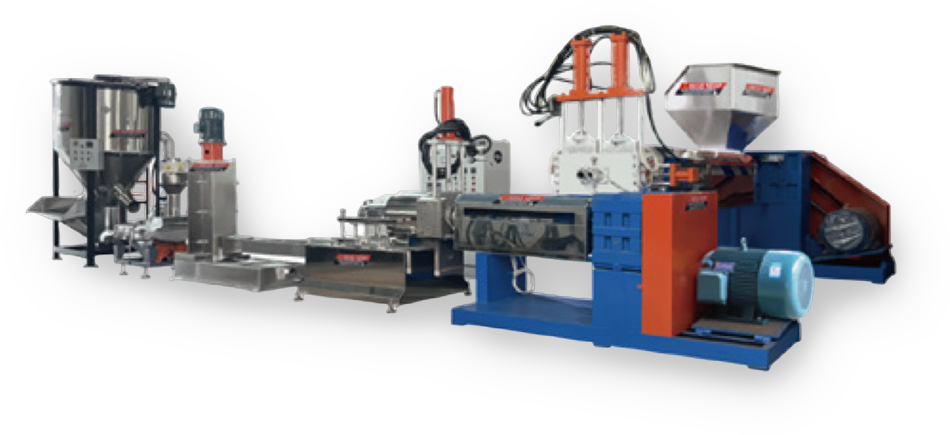
Dry granulation systems are mechanically simpler. You typically see a single-screw or twin-screw extruder feeding a strand die, a water trough, an air knife or suction dryer to strip surface moisture, and a strand pelletizer. Because the pellet surface is only superficially wetted, energy-intensive thermal drying isn’t required.
Key advantages of dry granulation:
-
Lower capital cost and smaller footprint — many lines skip the large centrifugal dryer and water circulation loops.
-
Reduced energy consumption for drying. Without trapped moisture inside pellets, you avoid thermal drying stages that can eat up 15–20% of total electrical load, according to data from Plastics Recyclers Europe.
-
Less risk of hydrolysis degradation in moisture-sensitive resins like PET or PC, where residual water can trigger chain scission during reprocessing.
The trade-offs are real, however. Dry strand lines demand consistent melt flow and careful operator attention during startup; strand breaks can stop production. More importantly, dry granulation does almost nothing to wash the material. If your input contains surface dust, paper fiber, or light organic residue, those contaminants remain inside the pellet — becoming a visible defect and potentially a mechanical property killer in the final part.
When water becomes an advantage: wet granulation
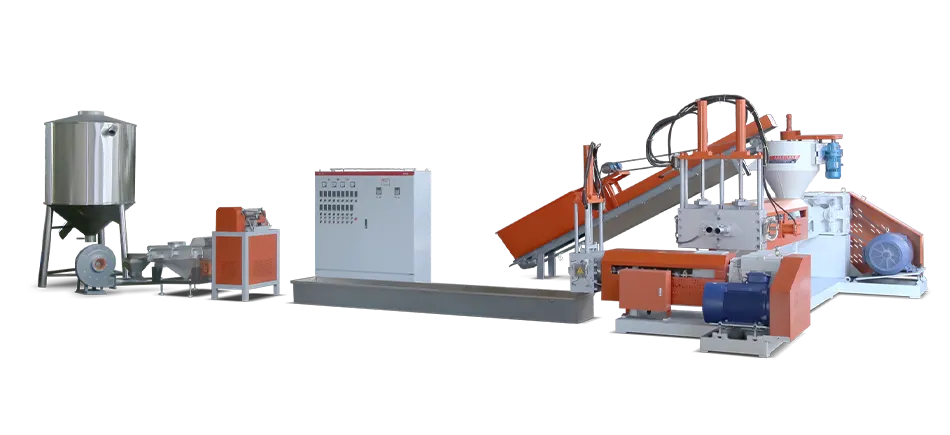
Wet granulation systems use water directly at the cutting chamber to shape and cool the pellets. Common configurations include underwater pelletizers and water-ring pelletizers. In both cases, the pellets are transported in a water slurry to a centrifugal dryer, where surface and internal moisture are spun off, followed by thermal drying if needed.
The first overlooked benefit is particle cleaning. The hot pellet surface, freshly cut and still soft, contacts moving water, which strips away ultra-fine dust and lightly bound contaminants. It’s not a replacement for a full washing line, but it’s an extra purification step that often results in higher pellet clarity and lower odor — critical for film-grade recyclate and injection molding grades targeting consumer goods.
A water-ring pelletizing system with integrated pre-washing can handle materials that would choke a dry strand line: printed film, regrind with paper label fragments, or heavily soiled agricultural plastics. The water flow also helps homogenize pellet temperature, reducing internal voids and producing denser, more spherical pellets that bulk handlers and blenders prefer.
The downsides are well-documented but manageable:
-
Water treatment requirement. Process water picks up dissolved organics, inks, and suspended solids. Without proper filtration and treatment, odor builds up quickly, and discharge regulations can stop a plant in its tracks.
-
Higher drying energy. Even with high-efficiency centrifugal dryers, pellets exit with 0.5–2% surface moisture and may need a subsequent thermal drying step, adding 10–20 kWh per ton of material processed.
-
Maintenance complexity. Water pumps, filtration units, and sealing systems add components that need regular inspection. Still, modern modular skids have significantly reduced downtime — many plants now schedule wet-end maintenance in under four hours per month.
Side-by-side comparison
| Criteria | Dry Granulation (Strand) | Wet Granulation (Water-ring / Underwater) |
| Input cleanliness required | High — clean post-industrial or hot-washed flakes | Moderate — tolerates light surface contaminants |
| Typical energy for drying | Low (surface drying only) | Medium to high (centrifugal + thermal) |
| Pellet shape & consistency | Cylindrical, can have fines if worn blades | Spherical, uniform, fewer fines |
| Odor & volatiles removal | Minimal | Moderate (water scrubbing effect) |
| Water consumption | Almost none | 0.5–2 m³ per ton, requires treatment |
| Startup & operation | Simple, manual strand threading | More automated, faster stabilization |
| Best for resin types | Rigid regrind, engineering plastics | Film, fiber, post-consumer polyolefins |
Decision tree: which path fits your material?
Ask yourself three questions before choosing:
-
What’s the contamination level? If you regularly see labels, glue, or dirt even after washing, wet granulation’s flushing effect could be the quality gatekeeper you need.
-
What’s the target application? Thin film, extrusion coating, or high-clarity packaging demands low gels and no specks — wet lines tend to deliver better optical properties. For thick-walled molding or construction products, dry granulated pellets can be perfectly adequate.
-
What’s your tolerance for operational complexity? A dry strand line can be managed by one experienced operator. Wet systems reward process discipline but can frustrate teams without water treatment expertise.
If your recycling output spans multiple grades, or you’re planning a line that needs to evolve with market demand, Rehoboth’s modular granulation solutions are built with this flexibility in mind — allowing you to switch between pelletizing technologies within the same system architecture without retooling the entire plant.
The bigger picture: granulation is only one link
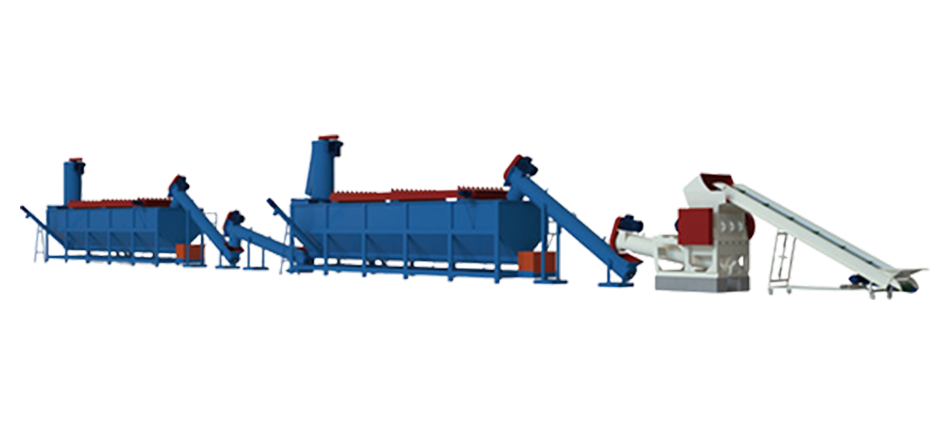
Here’s what often gets missed in conversations about dry vs. wet: the pelletizer is neither the most energy-hungry nor the most critical piece of a recycling line. Shredding, washing, and extrusion temperature control frequently dominate energy consumption. A poorly chosen shredder can create fines that overload drying stages; undersized filtration can let melt contaminants reach the die and ruin pellet quality overnight.
That’s why, when you evaluate a new or upgraded line, looking at individual machines in isolation can lead to costly mismatches. Integration matters. If your business is ready to move beyond a stand-alone pelletizer and into a cohesive recycling line — one that balances throughput, energy use, and consistent pellet quality — Explore Rehoboth’s complete range of recycling systems. Their engineering team matches granulation technology to your feedstock profile and end-use specifications, not the other way around.
Ultimately, both dry and wet granulation have their place. The winning combination isn’t always the most advanced technology; it’s the one that fits your feedstock, your team’s skillset, and your customers’ real requirements — without breaking the energy budget.
Disclaimer: This article provides general information and does not substitute for professional engineering advice. Always consult qualified specialists to evaluate your specific material characteristics, site conditions, and safety requirements before selecting recycling equipment.


 Download
Manual
Download
Manual Video
Video



 Connect: